Ancient Foundations: An Introduction
Hello reader! Welcome to my blog! I have begun reading Marc Aronson's book "Race: A History Beyond Black and White," and I am fascinated by his accessible writing style, development of arguments, and use of information to set up his perspective. I chose to read "Race" because of its historical and sociological analysis. Personally, I prefer to read informational non-fiction books so this book stood out to me from our class reading list. While I might not have chosen to read this book outside of class, I am excited to delve deeper into it and share my findings with my readers!
When the topic of race arises, I often find that it becomes very emotion based and politically charged, which makes it difficult for me to listen to and understand. What first stood out to me when beginning this book was that Aronson began with history and factual evidence, depicting a time where race had no ties to slavery, discrimination or any of the things that we typically associate it with in our modern day. At the conclusion of his first chapter, Slaves, Hebrews, God, Aronson writes, "Readers, I am not asking you to agree with me, but to think with me. We need to face this history, and use it to learn about ourselves." (pg. 31). This was powerful for me because it made it clear that Aronson's agenda wasn't to convert the reader to his ideology, but rather inform the reader and raise questions so that the reader could form their own opinion. In my opinion, this is a much more effective way of writing a persuasive piece.
Chapter two, titled Greek and Barbarian, detailed a brief history of Greek and Roman culture and how they interacted with the concept of race. The Greeks were known for their free-thought, philosophy and democracy, to name a few. They prided themselves in being forward thinking and equal. Aronson explains, however, that their way of viewing the world set the foundations for the racism and prejudice we know today.
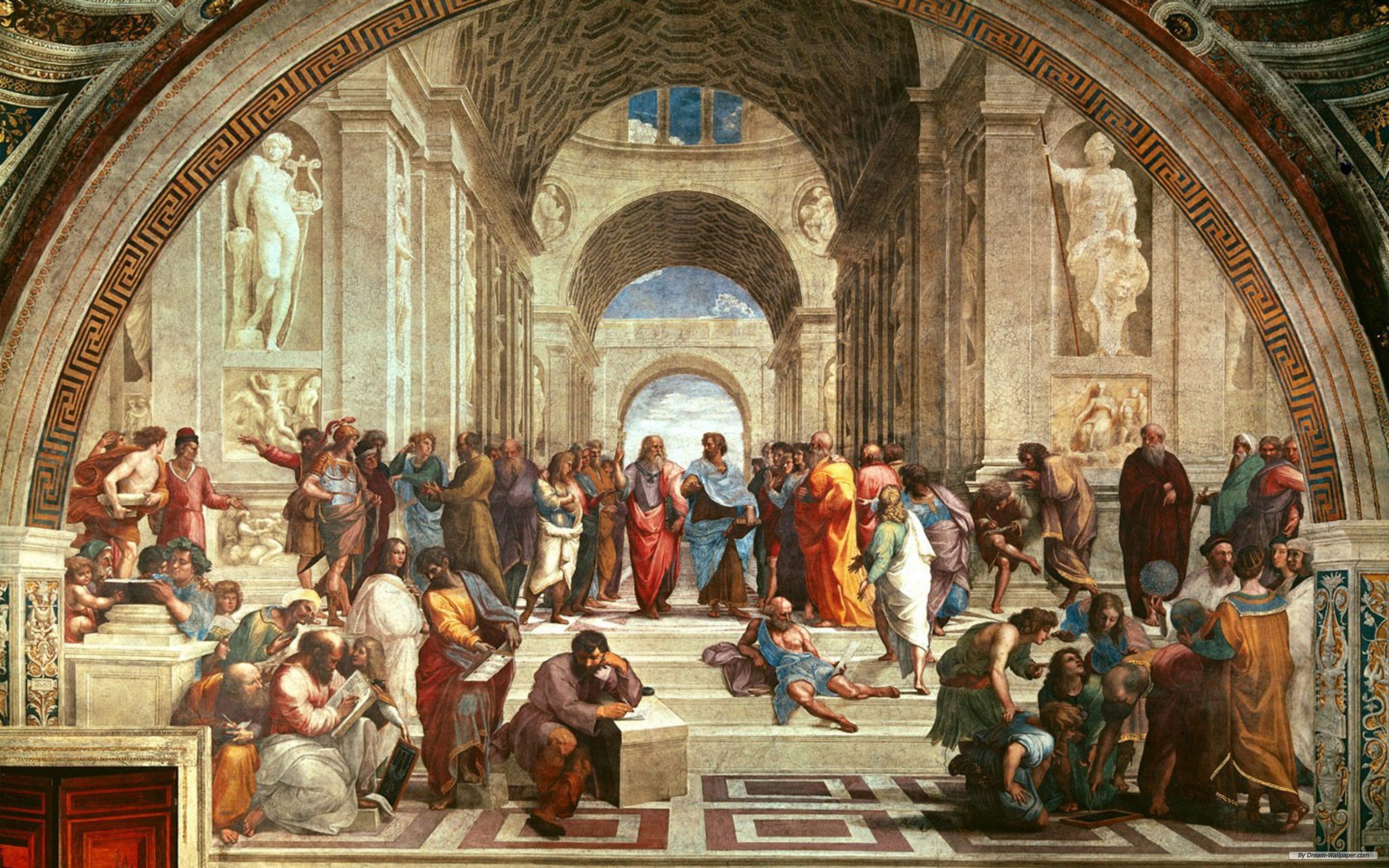 |
Image: Athenian Government. Brenau University: Trustee Library, libguides.brenau.edu/c.php?g=684125&p=4834703. Accessed 3 Mar. 2021. |
"In the very moment of giving humanity the gift of political freedom,
the Greeks laid the foundation for extremely enduring prejudices."
(Aronson, pg. 34).
Aristotle, a famous Greek philosopher, viewed the Greeks as superior to all other nations and people. He had decided that intelligence was partially based on the geography and climate of where you are from. For example, he had said that people in Europe were energetic but not very bright due to the cold, or that Asians were smart but unassertive. These assumptions became the basis of perceived racial/ethnic hierarchy. Aristotle then used this reasoning to state that due to the geography of Asia. Asians were weak and therefore deserved to be slaves. "True, free Greeks stood up straight, Natural slaves naturally stooped" (pg. 37). This was fascinating to me, to see someone who was such an abstract, free-thinker support something so rigid and superficial. However, Aristotle went on to use this argument to debate the justification of slavery, a debate among the elites at the time. While other greeks attempted to refute Aristotle's argument, their arguments never stuck. As time passed, defenders of slavery happily referenced the great Aristotle to prove that slavery was just and unavoidable. Aronson explained that he believes there are five "pillars" that make up race. This chapter depicted the first "pillar" of race: "the idea that people who look similar are part of a group that [have] many traits in common." (pg. 37).
Conversely, Ancient Rome represented how slavery could be successful while ignoring race altogether. Romans didn't discriminate based on race but by social status; "slavery was the ultimate expression of Roman rule, and Roman slavery had nothing to do with the curl of your hair or color of your skin." (pg. 51). Darker-skinned men could become powerful and respected Roman generals based on merit and skill, versus skin color. The Roman social structure was founded on the respect for social classes. The rich and powerful ruled in government and society. The poorer Romans had their freedom at least, but below them were hundreds of thousands of slaves. The key was this, "anyone of any ethnic background could be a slave. Your homeland, appearance, or religion had nothing to do with your status." (pgs. 51-52). Many slaves were either born, sold, or forced into slavery. The main message is this: slavery was not originally a product of racism, even though it has a recent history of that.
This deep history really made me reflect on our modern perception of slavery and race. How did we become so sensitive to and aware of our skin color? Where did this prejudice arise? How have we become so separated? I already feel like I have gotten a lot out of this book, and it has opened my mind to how multi-faceted race is, much more than just black and white. I look forward to continuing my reading of this book, and I hope you come back to catch up next week! Thank you for reading!

It was certainly interesting for me to read about how, historically, discrimination and slavery weren't just based on biological differences. A well-written post.
ReplyDeleteThank you! It has been very interesting to see the history behind it all, and get rid of misconceptions I had about the history of slavery.
DeleteHi Sara!
ReplyDeleteI agree with you that Aronson's informational, unemotional tone has helped me to understand and be more interested in the information that he is presenting. It makes it easier to comprehend and I feel as if I am learning and thinking more than I do when it is written in a very charged tone.
I also appreciated that you called to attention Aristotle's position on slavery. As I was reading, I was also struck by the arbitrary standards that the Greeks used to justify slavery. Though race wasn't an aspect of slavery, the way that they still used physical characteristics was interesting to me. The divisions within society were also fascinating to learn about, especially the prejudices associated with coming from a specific area (Europeans couldn't be smart because of the cold, etc.). I will be interested to continue reading and see if this location-based prejudice was part of the basis for today's racism. Either way, I can already see how slavery created divisions (or was created by divisions) and how such divisions could lead to a superiority complex for the people at the top of the social hierarchy.
- Francie
Thank you for your comment! It is fascinating definitely. Interesting how you mentioned the superiority complex, I didn't think of it that way, but that complex can be seen in almost every culture/historic time-period throughout the book, and throughout history. Thank you for reading!
DeleteHello Sara,
ReplyDeleteI'm glad to see you're enjoying this book as much as I am so far! I have to agree with the point you made about the author's attitude in the second paragraph. Thus far, Aronson keeps a very open mind and flexible perspective when he discusses his ideas. He doesn't push his readers to agree with everything he says, which I think is important when presenting arguments on such a delicate topic. I find that I get more out of a text this way, because I'm encouraged to think for myself about the material instead of being told to accept it as the truth.
Hi Naomi! Thank you for reading my blog! It is interesting for me to find that most readers of this book are noticing the unbiased and factual way Aronson presents his arguments. I too find I get more out of it when I can form my own opinions based on the facts presented to me. :)
DeleteMy book seems to be much like yours in the sense that it tries to stay strictly factual. I do agree that it makes reading it and understanding it that much easier. It allows you to understand what has happened without the information coming from a specific viewpoint.
ReplyDeleteHi Brendan! Yes definitely I agree. It is refreshing to see arguments based on fact and not just purely emotional. Thank you for reading!
Delete